Showing posts with label Aurasma. Show all posts

Wednesday, 12 March 2014

Getting Started with Augmented Reality as a Learning Technology

Aims

The primary audience for this discussion are lecturers who are wishing to get started with Augmented Reality within their teaching and learning. The aims of the paper are to answer the questions;
  • What is Augmented Reality as a learning technology?
  • How is Augmented Reality being used in teaching and learning?
  • What do you need to consider if you wish to use Augmented Reality in your teaching?

Background

The Elevate Team work closely with staff and students to encourage, enable and evaluate the use of technology in learning and teaching at the University Campus Suffolk. In particular, to;

  • Help staff to integrate innovative technologies to enhance their teaching programmes
  • Share innovation and good practice through facilitating an active community
  • Evaluate the impact of enhancements on the student learning experience
Develop and pilot ways to enhance and develop learning through innovative technologies
The Elevate Team have been using the Aurasma Augmented Reality Software since 2011.  Aurasma uses advanced image and pattern recognition technology to identify and understand images and objects in the real world, blending them with rich interactive content such as videos and animations.

What is Augmented Reality?

“First and foremost, augmented reality is a set of technologies that seek to integrate the digital with the real. There are several versions and flavors of AR, but there are certain things that all of these have in common: displays, input devices, tracking, and computers.” - (Carmigniani et al (2011))

The goal of augmented reality is to add information and meaning to a real object or place. Unlike virtual reality, augmented reality does not create a simulation of reality. Instead, it takes a real object or space as the foundation and incorporates technologies that add contextual data to deepen a person’s understanding of the subject. For example, by superimposing imaging data from an MRI onto a patient’s body, augmented reality can help a surgeon pinpoint a tumor that is to be removed. In this case, the technology used might include headgear worn by the surgeon combined with a computer interface that maps data to the person lying on the operating table. In other cases, augmented reality might add audio commentary, location data, historical context, or other forms of content that can make a user’s experience of a thing or a place more meaningful.

Another term that can be used to describe augmented reality is ‘Visual Browsing’. A display is required to overlay the digital material on to the real world. With the fast moving world of technology and the pace that technology improves, both smartphones and tablets are now powerful enough to run augmented reality applications. When using a smartphone or tablet with augmented reality applications you can see why the term ‘visual browsing’ has been coined, you get a sense of visual interacting with your surroundings. You are able to ‘browse’ the available digital content that is displayed to you.

How is Augmented Reality being used in teaching and learning?

By its nature, augmented reality lends itself to a marketing tool. UCS’ first public use of the ‘AR’ was not in the field of teaching and learning, but as a project with the Marketing and External Relations department. UCS launched one of the first University prospectuses with embedded video content.

When researching what other institutions have been doing with augmented reality some of the first examples you will find are along the marketing lines, you need to dig deeper to find the practical examples being used in education.

To answer the question of how is augmented reality being used in other institutions we will draw upon three case studies.

Case Study 1: SCARLET Project, Mimas, University of Manchester

SCARLET stands for Special Collections using Augmented Reality to Enhance Learning and Teaching

http://teamscarlet.wordpress.com/category/mimas

“SCARLET demonstrates how Augmented Reality (AR) can bring educational resources to life by surrounding original materials with digital, online content. By adopting a mixed-team approach, with academics, librarians and technical staff, we’re helping UK universities gain knowledge and skills to enhance their collections using AR.” - Mimas website

The initial work of the SCARLET project was to work with the world-renowned St John’s fragment. The small fragment measures less than 9cm in height and is of great importance. It can be confidently dated to the first half of the second century A.D.


Fragment of St. John's gospel

With this piece of papyri being not only very rare, but also very fragile, the John Rylands Library, Manchester where it resides would still like to show this wonderful artefact.

The team at SCARLET worked with academics to make a digital version of the complete manuscript from which this fragment makes up a small percentage. Using the fragment as a ‘trigger’ image for the augment application to recognise, this then overlaid the complete manuscript on the screen of the device, with the real time image from the devices camera.

This enabled students/visitors to hold their device smartphone/tablet over the fragment (in a display case) and to see how the manuscript would have looked if it was an undamaged, complete document.

The SCARLET project has since worked with a number of academics and other institutions to further develop their understanding of effective uses of augmented reality in education.

Case Study 2: Engaging Students at Bromley College

http://teamscarlet.wordpress.com/2014/01/17/an-ar-experiment-engaging-students-at-bromley-college/

Barry Spence at Bromley College had already been looking at using the Aurasma platform to see how students engaged with augmented reality. Barry created some revision cards that once viewed with an appropriate device, would overlay that card with video, giving the lecturers thoughts on that revision topic.
  • This lead to a successful application for an Innovation Project. The project aimed to;
  • To explore the potential for Augmented Reality to leverage student engagement.
  • The possibility of enriching paper based course materials with voice-overs, animations, videos and images.
  • Investigate the potential of replacing standard A4 course notes.
  • Take advantage of what has become the widespread ownership among students of Smartphone and Tablet Devices in accessing these new materials.

The viability of utilising Augmented Reality technology in support of mobile learning from both the perspective of student learning experience and wider network accessibility.

A double-sided A4 flyer was produced, folder in half to be an A5 leaflet. Each page had specific references to digital material which comprised of a video, two animations with voice overs and a link to a moodle quiz.

The overall effectiveness was measured by each group completing a chart, recording their overall sense of competence before the lecture, after the lecture and following the use of the augmented reality materials.

A prerequisite of the talking part in the project relied upon students owning suitable Smartphone or tablet devices, of the original forty only sixteen had suitable access.

The screenshot of the spreadsheet chart below shows the competence outcomes of the participants 1 (very high) to 10 (very low). An initial visual assessment of the outcome reveals that of the sixteen taking part, four students felt that the inclusion of AR materials had not improved their sense of competence in the subject. However 12 did indicate that the AR had made a measurable impact. Taking the average for improvements gives a figure of 2.42 (almost 25%).
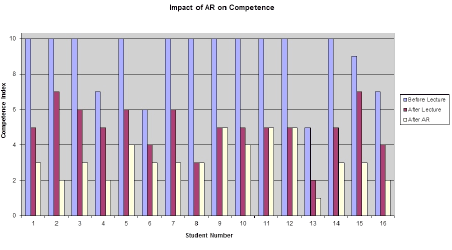
“This was the first trial of using AR here at the College for a single target group. The results gained from the feedback are certainly encouraging. With regard to the five points outlined in the overview for the project, I feel these have all at least in part proved worthwhile as criteria for inclusion in future augmented reality project work.” (Barry Spence 2013)

Case Study 3: University of Exeter - Unlocking the Hidden Curriculum

One of the first uses of augmented reality in education was by University of Exeter. Unlocking the Hidden Curriculum was a Jisc funded project from 2010/11.

http://blogs.exeter.ac.uk/augmentedreality/

The main campus of the University of Exeter is built on a country estate overlooking the city and surrounding countryside. The campus includes a variety of distinctive habitats and is rich in biodiversity. Students and grounds staff have regularly collected data through their programmes of study and conservation activities but this information and knowledge has hitherto remained hidden from the wider community.

The project will enable the campus to function as a ‘living laboratory’ and reveal a dynamic landscape of flora and fauna at any time of day or season to a variety of audiences who wish to interact with this unique location. Using Augmented Reality, the campus will be transformed into an accessible learning resource to support the formal and informal curriculum. Scientific data will be presented in a creative way to interpret the living landscape and promote engagement with Education for Sustainable
Development (ESD).
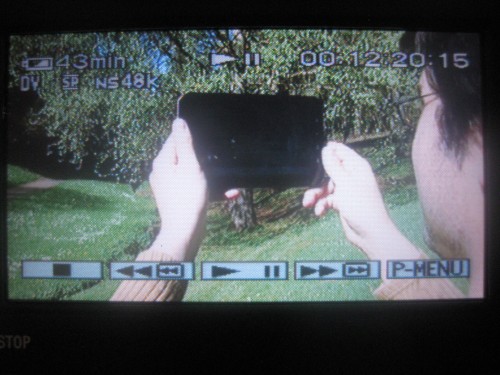
Visitors to the campus equipped with suitable smartphones/tablet devices will be able to trigger information presented as rich visual and audio media as they explore a variety of habitats and areas of particular interest. This location-specific information appears as an overlay superimposed on a viewing screen fed by the smartphone’s built in camera. (Project website: http://blogs.exeter.ac.uk/augmentedreality/about/)

Below is a video showcasing the Biodiversity data using the Layar application.


Two of these three case studies use augmented reality in an immersive fashion. Both University of Manchester’s Mimas team with Project Scarlet and the University of Exeter and their Unlocking the Hidden Curriculum take the end user out of their normal environment.

This allows for modification and redefinition of the learning activities, whereas the Bromley College example acts as a substitution of the activity. According to the SAMR model Puentedura (2009) the technology acts as a direct tool substitute, with no functional change.

It would be possible for the Bromley College example to completed without the addition of the augmented reality, although this is the case, it does still give a ‘wow’ factor.

What do you need to consider if you wish to use Augmented Reality in your teaching?

As previously mentioned the pace of change in technology is very fast moving. This has meant that authoring augmented reality applications has been getting easier with each iteration of the software tools.

We are now in a position where you do not need to be a computer programmer or web developer to be able to make some very interesting ‘AR’ materials. Once a platform has been chosen - here at UCS, Aurasma has been the platform of choice - there are two key requirements;
  1. An effective and appropriate Learning Design
  2. Required multimedia and web based resources
AR is just another tool that can be used, as with other tools learning design is king. The activity/resource must be thought through, learning outcomes decided. Planning the use of materials will allow you to think through how you want it to work, and if AR is actually the most effective technology to use.

The actual creation of the augmented reality materials is now all done through a web site. Following a few easy steps means you can create some really exciting materials. For example the workflow below shows the limited number of steps to go from having a couple of resources. One acting as the ‘trigger’ - what your devices recognises and the other as the ‘overlay’ - the action that happens once the trigger is recognised (for example a video plays when a photograph is recognised.


This video shows how easy Aurasma is to author. The video shows how to add a trigger image and overlay video, and then how to make the system recognise them - creating the ‘aura’, which is the name given to process of a trigger image being recognised and the action of the overlay playing.


What are we focussing on at UCS?

An area that has been popular with lecturing staff have been research posters. A number of lecturers have approached the Elevate Team to help develop interactive posters, there have been two main reasons for this.
  1. To included multimedia material
  2. To allow more information if the poster is unaccompanied
Being able to stand in front of a poster, hold up a mobile device to receive a video of the researcher talking through their methodologies or sharing their conclusions, really does bring the materials to life. Below is a link to a Research Poster that went to a national conference. Rather than showing video, this poster triggers audio recordings of students discussing their course. To accompany the audio, keywords from the audio are displayed,

Conference Poster: 


To move this along from being a just passive onlooker, we have been looking at ways of creating more interaction, to engage the cognitive processes. Using ‘overlay sequencing’ in the Aurasma developer studio means we are able to create individual pathways through the materials. In essence we are able have different clickable hot spots in the digital material. This allows us to create quiz questions, that the users selects the answer on screen, to then reveal further digital material.

One example we have created so far is a lecturer posing a question, with multiple choice answers appearing on screen, the user then selects their answer. Another video can then be played giving feedback for the previous answer. Further questions can then be asked, or the user can be directed to more resources. A demonstration of a prototype of this in is below:


The intention in the future is to further develop this approach and combining the approach and lessons learnt from the work at Bromley College.

Conclusion

Looking at the use cases here at UCS and case studies wider afield, augmented reality has not become mainstream as yet. Currently there is a need to find that “killer” application for the technology. One use that will capture the creativity of the subject and lecturers. The one that captures the enthusiasm of the learners, but still has a proven learning design and pedagogical values.

One hope for the future is that an Open Standard for Augmented Reality platforms can be found. This would mean that you are not tied into one platform from one supplier. Currently there are a number of platforms, if you develop your content in one of those, it is not possible for it to be accessed via the others. This would require a huge leap forward, but an Open Standard would also make future use more appealing.

References

Carmigniani , J. ; Furht , B. ; Anisetti , M. ; Ceravolo , P. ; Damiani , E. ; and Ivkovic , M. (2011) Augmented Reality Technologies, Systems and Applications. Multimedia Tools and Applications 51 , no. 1 : 341 – 477 (Accessed: 31 January 2014)

Vaughan-Nichols , S.J. (2009) Augmented Reality: No Longer a Novelty. Computer 42 , no. 12 : 19 – 22 (Accessed: 31 January 2014)

SCARLET (Special Collections using Augmented Reality to Enhance Learning and Teaching) (2013) Available at: http://teamscarlet.wordpress.com/category/mimas (Accessed 6 March 2014)

Mimas Powering Knowledge (2014) Available at: http://mimas.ac.uk/portfolio/scarlet/ (Accessed 6 March 2014)

Fragment of St. John's gospel. Available at http://www.library.manchester.ac.uk/searchresources/guidetospecialcollections/stjohnfragment/ (accessed: 6 March 2014)

Tuesday, 22 October 2013

AR Developments - Engaging the Cognitive Processes

What is it?


Augmented Reality (AR) is the layering of digital information over a real time, live view of objects in the real world.

This digital information can be text-based, images, videos and 3D models, any content that is digitally available has the ability to be overlaid. This technology has the potential to enhance the users’ experiences by combining real and digital information on today’s smartphones and tablets.

What have we been doing?


Here at UCS we have been looking at AR and its uses since mid 2011, the Elevate Team were on a development sprint looking at location (GPS) based layering of digital material. We were using the Layar tool to allow visitors to the Ipswich Wet Dock to find out more information about UCS and its waterfront campus.

Visitors could download the app and subscribe to our channel, allowing them to view the surrounding area through the screen of their smartphone or tablet, this would overlay information about the buildings they were looking at. Due to the technologies in the smartphone/tablet the app would know where they are and in what direction they were looking. We could then plot via GPS what buildings were where and then display certain information about those buildings.

For instance, when looking towards the Library building, the user would be made aware that it was the Library building, what the opening times were, links to the Library’s communications channels and if the user was staff or student, they could search the catalogue.

The last day of this development sprint was set aside for further research. This is when we came across a beta release of a tool called “Aurasma”. Aurasma refers to itself as a visual browser, using mobile devices cameras and image recognition technology to overlay digital content.

Previous AR developments were based around “markers”, meaning you needed a very bold/contrasting icon style image for computer cameras to recognise. With the fast paced developments in mobile technologies and the processing power this brings, companies have been able to develop markerless tracking, known as “Natural Feature Tracking”. This means that image recognition technologies can identify everyday objects as markers, and therefore trigger a reaction within the app.

UCS was one of the first institutions to launch a prospectus with embedded digital content. Prospective students could pick up a copy of the prospectus, download a free app and then hold their mobile device over certain pages of the prospectus (where indicated) and they would have videos play to give more information. An advertising video is available here.

The Elevate Team took the work they had done with the Marketing Team in the prospectus and wanted to engage more with the academic teams. This work progressed into embedding videos in academic research posters. A number of these posters have been produced and one has won ‘best poster’ at an International Radiography conference.


Where are we now?


We have been thinking about ways in which we can take this technology a little further and to really use it in a teaching and learning setting.

We want to really enhance the student experience and to engage with their cognitive processes, getting them to think. We have been looking at developing small learning objects that can be used with mobile devices. Below is a video of a sample learning object that engages with students on a different level.


We no longer have a video that you simply watch and then move on from, we have included responses after the video in the form of a multiple choice answer question.

As you can see in the video, an image on the poster triggers a video to play. The video is someone asking a question of the viewer. The viewer is then able to make a decision/answer the question, which is then responded to in the video. In this instance, the video tells you if you are correct or incorrect and then shows some further feedback in the form of a further video. The video then goes on to show a further question popping up, this question takes you to a form to fill in, giving text based answers/feedback. This information is stored outside of the app, which is accessible to the quiz owner.

This example shows one question and feedback loop, but it is just as easier to create multiple questions, creating individual pathways through the materials if that was required.

This is another tool in our armoury and again, learning design is king.

Wednesday, 30 May 2012

So what did we cover in our JISC RSC Location Aware workshop?

A question we aren't being asked very often, however, a big thank you to JISC RSC Eastern who filmed the session and edited to the following. Note, it is one hour, ten minutes. So you may want to flip through some sections.

The video is available from:


Thursday, 17 May 2012

Location Aware Workshop for JISC RSC Eastern

I'm just following up on the location aware learning activity workshop we (Elevate Team) at UCS ran with the JISC RSC Eastern on 9th May.

This all day workshop involved using low threshold applications, QR Codes and Augmented Reality (Aurasma) to develop a set of location aware learning activities. It was pitched at the begineer level, so included lots of activities around what is the technology and hands on exposure for participants to actually use it. This also involved using the Quickmark QR Code, Aurasma, & Comic Life apps on the iPads to do all the work (not a networked PC or laptop in site).

The workshop was over subscribed, and based on the twitter comments, seemed to be very well received:

9 May Tracey Tutt ‏@traceytutt: Brilliant day thanks to @andyramsden @iAaronBurrell @thedavidmullett #UCSAUG augmented reality at UCS today @rsceastern fantastic!
9 May Kerry Hine ‏@KerryHine1: Absolutely amazed - created a basic poster with 2 video links using Aurasma in 10 minutes #UCSAUG @daveghunt
9 May JISC RSC Eastern ‏@rsceastern - #UCSAUG some creative uses of Aurasma Augmented reality app for showcasing good and bad presentation skills. @rsceastern
9 May andyjb ‏@andyjb: arron of ucs has just put me onto @aurasma worth a look #ucsaug
9 May JISC RSC Eastern ‏@rsceastern: How to make a perfect cup of tea...mobile learning poster using QR codes and Comic Touch #UCSAUG @rsceastern

The material we used included:

The presentation: http://dl.dropbox.com/u/12497737/QRAR/Location%20aware%20workshop%209th%20May.pdf

Aurasma Examples

As a follow up to the workshop we'll be releasing our documentation around how we've deployed Aurasma Augmented Reality Visual Browser, and we'll hopefully being running the workshop with JISC RSC Eastern support at other HE/FE institutions within the region.


Tuesday, 27 March 2012

e-assessment, mobile devices and augmented reality posters (aurasma)

The Elevate Team are continuing to explore the use of augmented reality posters using the aurasma application. The latest in the series is a poster to support a 45 minute paper I am presenting at the RSC JISC Eastern e-assessment showcase event on the 30th March. The poster contains two videos, discussing different aspects of using mobile devices within the e-submission, and e-feedback process.

The poster is available from:

This development makes a number of good practice enhancements, for instance, the inclusion of three routes into the video content, and clearer support on downloading the application. It also allows us to further explore the distribution model, where we want to deploy interactive posters through the UCS Connect App (or equivalent). This went remarkably well, as those who already have installed the UCS Connect App simply need to open their existing app and scan one of the codes on the poster, and it works. So no need to install apps.

Another issue I'm interested in is exploring the idea of how easy is it to update the video linked to the trigger image. For instance, if I have created a video for a poster, however, a new video becomes available with updated information but I don't want to create a new set of trigger images and poster. For this poster I have only released half the story. I will be including the evaluation data / feedback from lecturers, course administrators and students next week. This scenario will let us test the best way to add content to existing trigger images and posters.

If you would like to explore how to create an augmented (interactive) poster, the Elevate Team are running a workshop for RSC JISC Eastern at UCS on the 9th May (see http://www.jiscrsc.ac.uk/eastern/events/2012/may/designing-location-aware-learning-activities-qr-codes-augmented-reality.aspx)


Tuesday, 13 March 2012

Explanation of Aurasma UCS Connect: What are we up to?

As mentioned - and previously posted - we have been working closely with Marketing to explore the innovative use of Aurasma visual browser, and have released the UCS Connect App.

The following is a recording of a recent BBC Radio Suffolk Interview (13th March, 2012, 11.40 AM), between Andy Ramsden, Nicole Taylor and Mark Murphy

It will hopefully give you the context of what we've been doing. If you have any questions, please email elevate@ucs.ac.uk

Friday, 2 March 2012

Release of #UCSConnect in the App Store #aurasma

UCS Connect, the visual browsing application reskinned from the Aurasma Lite app has now been approved and is a avilable for download from the app store.


Shown below is the app in the app store via an iPhone, UCS Connect is also available via the Android Market Place for users with Android devices.


UCS Connect in App Store


The app has been released to allow us to take advantage of the Aurasma Platform, allowing the new 2013 Undergraduate Publication to have video content embedded in the printed publication.  As well has the Undergrad Publication the Elevate Team are using the app/platform to assist in the dissemination of other projects/findings.

Recently we supported the production of a conference poster, allowing the academic member of staff to embed the audio files from student interviews in to the printed poster.  The poster and views of the author can be found here and here.

There is great interest for this application of bringing the physical and virtual worlds together, both from a marketing/promotional aspect and the teaching and learning.

The Elevate Team are going to be looking at how we can make this more of sustainable technology, currently it is quite niche, although getting lots of interest.  We will be working on a "Getting Started" guide to using and creating "auras", the name given to the digital interaction.  Currently we are running all of our developments through one developer account with Aurasma, we will speaking to their Partners Manager to see if there are options for allowing this development to grow sustainably.

The Elevate Team are also running a workshop on interactive posters and we will be sharing our developments with this technology.

The 2013 Undergraduate Publication is officially released on Monday and due to the nature of the technology used, the launch will supported by a press release, describing this as the first UK Institution to augment a prospectus with the Aurasma technlogy.


Tuesday, 28 February 2012

Thoughts from author of interactive poster #aurasma

As mentioned in a previous post, we have been working with Sam Chenery-Morris (Midwifery) to add an extra dimension to her Conference Poster. As the feedback indicates below, Sam perceives this as a great opportunity and plans to be using it in the future. If you'd like to find out how we might be able to work with you on your interactive posters just email us (elevate@ucs.ac.uk)

The following responses are from Sam.

What is the background?

Here's my story. I submitted an abstract for a concurrent session to the RCN Education conference in Harrogate. I was offered a poster presentation instead. I was delighted when Aaron mentioned the technology that could be embedded as the whole point of the presentation was about the student voices, which obviously came out on the poster with Aaron's help.

What value do you think this adds to the conference poster?

The addition of the audio and video clips was a brilliant addition to the poster. It adds value because delegates can interact as opposed to just glance/ read the words, they can hear and see the effects which enhance this poster.

Would you recommend this to a colleague?

I would recommend this to colleagues as it starts a dialogue, it encourages interaction at conferences and anything that helps delegates talk and network is a good thing. The posters were judged and again, had I been there on the first day and shown the judges I feel this may have been considered for a prize, not only was it innovative it was academic and fulfilled the judging brief.

Would you use this again?

I have already submitted an abstract for NET2012, and if it were accepted I would use the poster or the Youtube links to hear the student voices during the concurrent session and encourage delegates to try on their own devices.

Wednesday, 22 February 2012

Interactive Poster Prototype #UCSConnect #aurasma

The Elevate Team have been working with Sam Chenery-Morris, a lecturer within the School of Nursing and Midwifery.  Sam is presenting a poster at the RCN Education Forum Conference titled "Evaluating Midwifery Practice ".

The Elevate picked up on this poster during a chat with Sam as part of the "Learning Technologist for a day" model, where one of the team is based within the School of Nursing and Midwifery.  Sam has designed the poster and we thought it would be a good test to see how well we could embed some digital material into the printed poster.  Sam had some audio material that had been recorded with the students, so we set about creating the "auras" that would trigger the audio files using the Aurasma Development Studio.

As I type this we are awaiting approval of our UCS Connect app, a re-skinned version of the Aurasma app, as mentioned here.  The way Aurasma works means we are able to access our own content via their "Aurasma Lite" app, if that app is subscribed to one of our UCS channels.

To improve the experience of the audio we quickly added some images and some key text/subtitles thoughout the audio.  The "auras" are much more impressive if images/video is used.

Below is an image showing Sam's poster, including David to give a sense of scale :-)

Interactive Poster Prototype


We have used images that Sam had already added to her poster as triggers, these are the images that the mobile device will recognise and then complete the action that we have developed.  We have used the Aurasma icon to identify the images that have an action associated with it, as well as a small guide showing what to do in the bottom right of the poster.

You will see in the image below, that we have also included QR Codes to the same video content, these just link to the video in Youtube, this gives alternative access to the video content, for users without the app.

Showing the QR Code


Normally we would also include a short url giving another route to the material, but we chose this time to not include that manual route, just to see how users would interact with the poster.  Below you will see David demonstrating the poster using an Android device, this application is available to both iOS and Android devices.


 [youtube]http://www.youtube.com/watch?v=izo9LSpeU7A[/youtube]
http://youtu.be/izo9LSpeU7A

You will notice on the second "aura" that David is able to double tap the screen to make the video play in fullscreen mode, meaning that the device can be moved away for the poster, especially helpful when the digital content is a few minutes in length.


Apologies for the audio quality in the video as it was recorded in an open plan office, and the speaker on the Asus Transformers isn't the best.


We really are starting to see a buzz around this work, only today our Office of Research and Enterprise and shown an interest in working with us.  And we mustn't forget the UCS 2013 Undergraduate Publication that will have "auras" embedded within it, a sneaky peak of a page can be seen below:


 [youtube]http://www.youtube.com/watch?v=K4WkuFqDM_8&feature=youtu.be[/youtube]
http://youtu.be/K4WkuFqDM_8

The Elevate Team will be running a workshop on Interactive Posters at the next JISC RSC Eastern e-Fair.

Tuesday, 20 September 2011

Visual Browsing and Augmented Reality

An area that the Elevate Team are looking into at the moment is the overlaying of online, virtual resources with real world, physical items.  We'll be looking to work with our School of Science, Technology and Health, in particularly the division of Science and Technology where researchers are doing some very interesting work with international status in the field of regenerative medicine.  We'll be looking to take some of their data to make scientific posters come to life, with the overlaying of video and 3D graphics.

When we talk to colleagues we are currently talking about the "Harry Potter" effect, where newspapers etc. have moving pictures and stories.  We are currently working with our Marketing department to help them bring their next prospectus to life, we are hoping this will also bring the technology to the forefront and allow a wider audience to see what is possible, below is a quick demonstration showing what we doing:

[youtube]http://www.youtube.com/watch?v=rm6jkzwqVKg[/youtube]


The above example uses the brilliant Aurasma app, available on both iOS and Android devices, currently the iOS device is more advanced.  The app allows you to tag an image/part of an image, and the associaten a number of images/videos and actions to it.

Once the app recognises the image it plays the appropriate resource.  Currently this is all local to the device you are using when creating the "auras" via the app, but it is possible to apply for a developer's account.  We have a developer's account and this allows us to create "super auras", these are hosted on the Aurasma servers and means that any device in the world that subscribes to our channel is able to view the auras.

This is a new field for us, and one we believe it could be very exciting, we are very much looking forward to using this within the Learning and Teaching arena.